
Emerging Trends in Influencer Marketing for Small Businesses
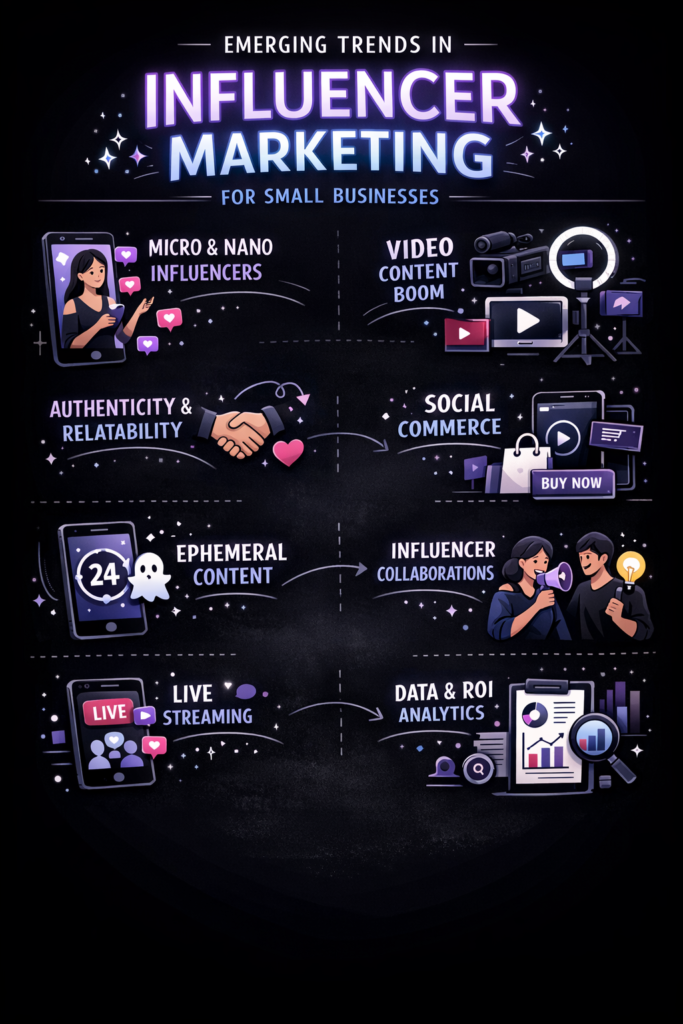
Influencer marketing has rapidly evolved from celebrity endorsements to a powerful, data-driven strategy accessible even to small businesses. Today, it’s not about having the biggest budget—it’s about authenticity, smart partnerships, and measurable impact.
With changing consumer behavior, new technologies, and platform shifts, small businesses must stay updated with the latest trends to remain competitive. In this blog, we explore the emerging trends in influencer marketing that are shaping the future in 2026 and beyond.
1. Rise of Micro and Nano Influencers
One of the biggest shifts in influencer marketing is the growing importance of micro (10K–100K followers) and nano influencers (under 10K followers).
These creators may have smaller audiences, but they offer:
- Higher engagement rates
- Stronger audience trust
- Niche community influence
Studies show brands are increasingly choosing smaller influencers because they deliver better ROI and authentic connections.
👉 For small businesses, this is a huge advantage—you don’t need a big budget to collaborate with effective influencers.
2. Authenticity Over Perfection
Modern audiences are tired of overly polished ads. They prefer:
- Real experiences
- Honest reviews
- Everyday content
Influencers who share genuine, relatable content tend to perform better than those creating “perfect” promotional posts.
👉 Tip: Encourage influencers to create content in their own style instead of forcing strict brand guidelines.
3. AI-Powered Influencer Marketing
Artificial Intelligence is transforming how businesses approach influencer campaigns.
AI helps with:
- Finding the right influencers
- Analyzing audience data
- Tracking campaign performance
- Predicting ROI
Many marketers report improved results using AI-driven strategies.
👉 Small businesses can now compete with larger brands by using AI tools for smarter decision-making.
4. Emergence of AI and Virtual Influencers
A new trend gaining attention is AI-generated influencers—digital personalities created using technology.
Brands use them because they offer:
- Full creative control
- Consistency
- Cost efficiency
However, this trend also raises questions about authenticity and trust.
👉 For small businesses, human influencers still work better due to relatability and emotional connection.
5. Long-Term Partnerships Over One-Off Campaigns
Instead of single sponsored posts, brands are now focusing on long-term collaborations.
Benefits include:
- Stronger brand trust
- Consistent messaging
- Better audience connection
Nearly half of brands now prioritize ongoing partnerships.
👉 Build relationships with influencers rather than treating them as one-time promoters.
6. Multi-Platform Influencer Strategies
Relying on one platform is risky. Brands are now expanding across:
- Instagram Reels
- YouTube Shorts
- LinkedIn (especially for B2B)
This approach increases reach and reduces dependency on a single platform.
👉 Small businesses should repurpose influencer content across multiple platforms for maximum impact.
7. Performance-Based Influencer Marketing
Influencer marketing is becoming more data-driven and performance-focused.
Brands now track:
- Sales
- Leads
- Conversions
Many collaborations include:
- Affiliate links
- Discount codes
- Revenue-sharing models
👉 This ensures businesses only pay for actual results, making it ideal for small budgets.
8. User-Generated Content (UGC) Dominance
Influencers are no longer just promoters—they are content creators.
User-generated content:
- Feels more authentic
- Can be reused in ads
- Builds stronger trust
👉 Small businesses can use influencer content across social media, websites, and ads.
9. Rise of B2B Influencer Marketing
Influencer marketing is no longer limited to lifestyle or fashion brands.
B2B companies are now using:
- Industry experts
- Thought leaders
- LinkedIn creators
This helps build credibility and shorten decision-making cycles.
👉 If you run a service-based business, this trend is especially valuable.
10. Increased Focus on Transparency and Ethics
With growing regulations, brands and influencers must clearly disclose paid partnerships.
Recent cases show stricter enforcement of transparency rules in influencer marketing.
👉 Honest communication builds trust and protects your brand reputation.
Conclusion
Influencer marketing is no longer just a trend—it’s a core strategy for small businesses. The future is shaped by authenticity, technology, and meaningful relationships.
To succeed in 2026:
- Focus on micro-influencers
- Prioritize genuine content
- Use AI tools wisely
- Build long-term partnerships
- Track real results
Small businesses that adapt to these trends will not only compete—but thrive in the evolving digital landscape.
Bonus: Quick Action Plan for Small Businesses
- Start with 3–5 micro-influencers in your niche
- Offer product exchange or small budgets
- Track performance using discount codes
- Repurpose content across platforms
- Build long-term collaborationsf